Can we wager a guess? You’ve been down every rabbit hole.
Tabs open for Australia, Costa Rica, Portugal. Maybe you’re having a cheeky scroll through Sri Lanka reels. Everyone’s got an opinion. Every surf blog has a definitive list. But somehow you’re more confused than when you started looking for the ideal surf spots with fun waves and beautiful beaches.
Here’s the thing though.
There’s no single perfect beginner surf destination. There is, however, a perfect one for you. And it probably isn’t as far away, as expensive or as complicated as you think.
Let’s get stuck into it.
Why beginners overthink this (and how to stop)
You don’t need the same barrels being chased by experienced surfers in Bali highlight reels. What you actually need is pretty simple.
- Consistent swell
- Forgiving waves
- A sandy beach
- Good, clear, patient instruction
That’s it. Beginner-friendly waves are mellow waves. Slow, rolling waves with a gentle push that give you time to pop up, find your feet and actually feel the ride.
Psychotic reef breaks and hectic lineups? Nah. Leave those to the advanced surfers (and those who haven’t read this article).
You want soft, fun beach breaks that let you make mistakes without consequence and there are far more of those around the world than the surf media would have you believe.
Once you know that, the destination question gets a lot easier.
Here’s some more first-timer learner surfer advice.
The big names: worth the hype?
Let’s run through the destinations that come up again and again when beginner surfers are planning their first surf trip. Some deserve their reputation. Some are better suited to more experienced surfers than the marketing lets on.
Costa Rica :
- Warm water, white sand beaches, undeniable good vibes
- Costa Rica is genuinely beautiful and the surf culture is real. But the wet season brings unpredictable conditions, flights from Europe aren’t cheap
- And you’ll be sharing beginner waves with every gap year traveller on the planet
- Solid destination. Not necessarily the smart first choice it’s made out to be
Sri Lanka :
- Sri Lanka is having a serious moment and the scenery is stunning
- Great waves for the right level too. But surf conditions vary wildly by season, it’s a long haul from Europe and it can feel overwhelming if you’re travelling solo for the first time
- Worth it eventually. Keep it in the back pocket for sure
Australia :
- Dreamy, right?
- Warm water, relaxed atmosphere, trendy cafes on every corner
- But Oz is pricey, competitive in the water and the surf culture there is honestly more geared toward intermediate surfers than true beginners
- You’ll have a great time. But you might not progress as fast as you’d hope
Why Morocco keeps coming up… and why it’s legit
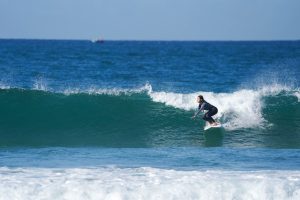
If you’ve been researching surf trips for longer than five minutes, you’ve seen Morocco mentioned.
Specifically Taghazout, a small town on Morocco’s Atlantic-facing west coast that’s quietly become one of the best places to learn surfing in the world. Not just in Africa. The world.
Here’s why it works so well for beginners specifically.
The waves
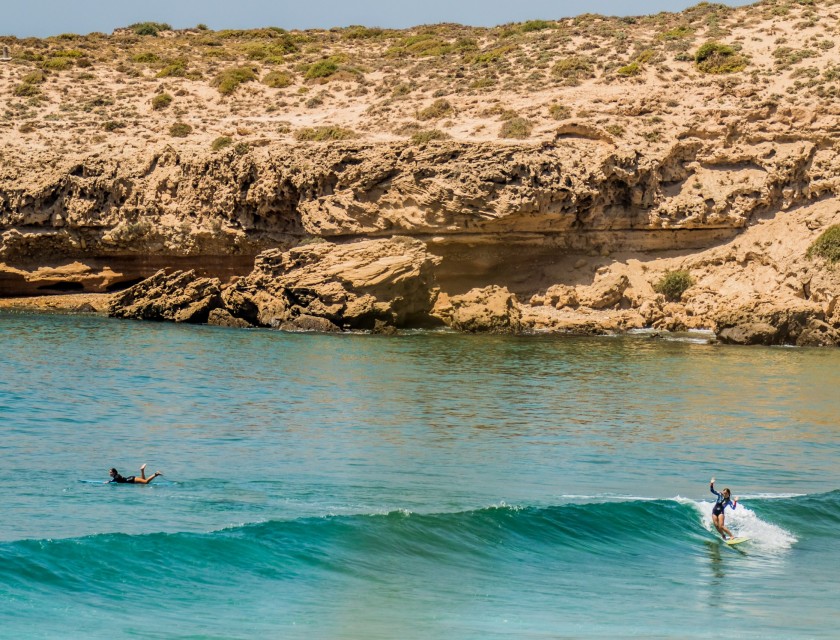
The beach breaks around Taghazout produce consistent, rolling waves that are long, readable and genuinely fun.
Not scary. Not over your head.
Just really good beginner waves, over and over again. The kind of green waves that give you enough time to actually think about what you’re doing.
Offshore winds keep conditions clean and the Atlantic delivers consistent swell without the drama of more exposed surf destinations.
The value
A surf camp in Morocco with accommodation, surf lessons and equipment hire often included can cost less than a long weekend city break in Europe.
If you’re budget-conscious (and who isn’t), that matters. You get more days in the water, better instruction and a proper experience without the long-haul price tag of somewhere like Sri Lanka or Costa Rica.
The travel
From the UK or most of Europe, you’re looking at a short, cheap flight.
Three hours and you’re there. No 14-hour hauls, no multiple connections, no arriving jet-lagged and losing two days of your trip recovering.
The culture
Taghazout is a proper surf destination with a real community built around surfing.
Surf shops, experienced instructors, a mix of skill levels all in the water together. We’re even super digital nomad-friendly these days!
The surf culture here is genuine and the people running surf camps and surf schools have been doing it long enough to be very, very good at it.
What to look for in a surf experience provider
Whether you end up in Morocco or anywhere else, here’s what separates a surf camp worth booking from one that’ll leave you frustrated.
Quality instruction and expert coaches
Not just a hire board and a “see ya out there”!
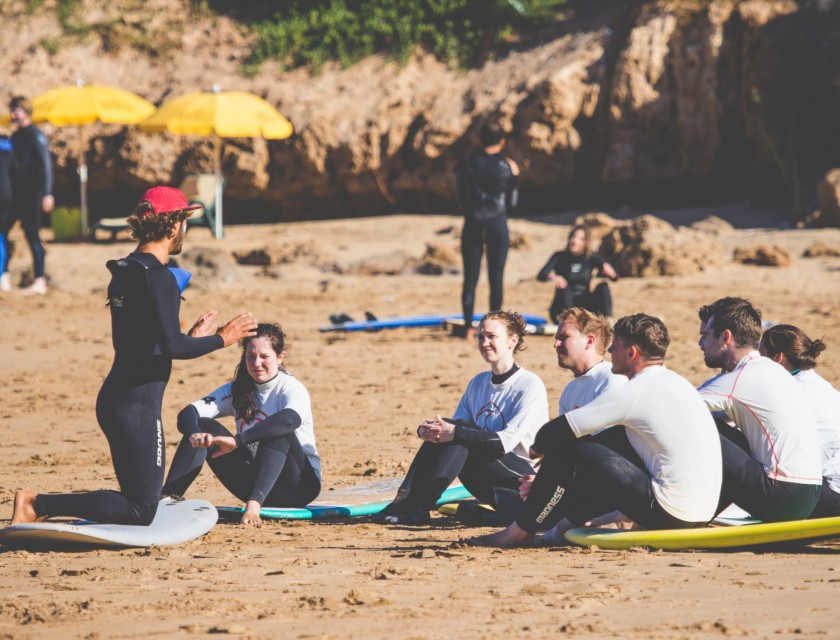
You want a proper surf school with qualified instructors who give you real feedback, correct your technique and actually progress you through the sessions.
Video analysis is a bonus. Genuine attentiveness is the baseline.
Equipment
Learning to surf on a board that’s too small is a nightmare and surprisingly common.
Good camps and experience providers put beginners on bigger, more stable boards and size them down as they improve. If a camp doesn’t mention board selection at all, that’s a red flag.
Group sizes
Packed surf lessons where one instructor is managing twelve people is not the move. Smaller group ratios mean more feedback, more water time and faster improvement. Ask before you book and remember… learning to surf is always more fun with a little crew.
The on-land experience
You’re going to be tired and salty post-surf.
A relaxed atmosphere, good food and a solid crew of people in the same boat makes a massive difference, especially if you’re travelling solo. The best surf experience providers feel like a community, not a conveyor belt.
Budget flexibility
The best camps offer options across price points, from dorm-style stays to more comfortable private rooms, without compromising on the surf experience itself. The waves don’t care what your budget is and neither should your camp.
Your surf camp checklist
Before you hit book, run through this. A good camp should tick most of these boxes.
- Qualified instructors who give real, personalised feedback
- Small group sizes so you’re not lost in the crowd
- Proper beginner boards, because bigger means more forgiving means faster progression
- Structured surf lessons, not just a board and a wave
- Accommodation and meals included with no surprise costs
- Options across different budget levels
- A mix of skill levels catered for so you can keep progressing
- Good reviews from solo travellers, not just groups
- Surf shops or gear rental nearby if you need extras
- A welcoming atmosphere that isn’t just built around advanced surfers
FAQ: Everything beginner surfers actually Google before booking
Q. Do I need any experience before going to a surf camp?
None at all. Surf camps are built for people who’ve never stood on a board. You’ll start on the beach learning the basics before you go anywhere near the water. Most beginners are catching their first waves within the first session.
Q. What’s the best time of year to surf in Morocco?
Morocco works year-round which is a big part of its appeal. September to April brings the most consistent, powerful swell. Summer months offer smaller, gentler conditions that are ideal for beginners. Whatever time of year you go, there’ll be waves suited to your level!
Q. How does Morocco compare to Costa Rica or Sri Lanka for beginners?
For most Europeans and people from the UK or Ireland, it’s the smarter choice. Shorter flight, lower cost, consistent beginner-friendly waves and no wet season to work around. Morocco isn’t better in every way, but for a first surf trip, it stacks up better than almost anywhere else.
Q. What should I look for when choosing a surf school or camp?
Check the checklist section above. The short version: qualified instructors, small groups, proper beginner boards, structured lessons and honest reviews from solo travellers. If a camp ticks most of those, you’re in good shape.
Q. Are the waves in Morocco too big for a complete beginner?
Not where you’ll be surfing. The beach breaks around Taghazout are mellow, rolling and genuinely forgiving. Instructors pick the right spot for your level every day. If conditions are pumping with awesome waves for more advanced surfers, they’ll be somewhere else entirely.
Q. Am I too old or unfit to learn surfing?
Almost certainly not. People learn at all ages and fitness levels. You don’t need to be an athlete. You only need to be willing to fall off a lot and laugh about it. The first sessions are about feel and confidence, not strength or speed.
Q. Is Morocco safe for solo travellers?
Yes. Taghazout is a well-established, welcoming surf town and surf camps are one of the best solo travel setups going. You arrive alone and immediately have a crew, shared meals and people to talk waves with. Most people who go solo leave wishing they’d stayed longer.
Q. What’s the difference between a surf lesson and a surf camp?
A surf lesson is a one-off taster. A surf camp is five to seven days of daily surfing, consistent coaching and real progression. If you want to actually learn to surf rather than just try it, a camp isn’t even a close call.
The bottom line
Stop searching for the objectively perfect wave or the objectively perfect destination. It doesn’t exist and chasing it is exactly what keeps people from booking anything at all.
What does exist is a place with gentle waves, consistent surf conditions, affordable surf camps and a proper surf school community that’s spent years helping beginners go from wobbly to genuinely, properly surfing. For a huge chunk of beginner surfers that place is Morocco. And if you’ve never seriously considered it, it might just be your next trip.
Hit us up about an upcoming stay. We have locations to suit all budgets and over 20 years of surf coaching and guiding experience. Good vibes guaranteed!