



Surfing has a funny way of teaching patience.
You can’t brute force it. You can’t hack it. You show up, paddle out, fall off, repeat. And yes, you’ll improve over time. But how you improve and how quickly you build confidence often comes down to one thing.
Who you do it with.
Learning alone is fine. Plenty of surfers start that way. But just like going to the gym or picking up a new creative hobby, momentum builds faster when you’re surrounded by people who share your curiosity.
This is super true for places like Taghazout. Where surfing isn’t an activity.
It’s part of daily life.
Wondering what the fastest way to get good at surfing is? This is your guide to why community accelerates surf progression.
First… let’s be honest about “progression”
Just to clear the air, progression feels good.
It’s nice when your pop-up is smooth. It’s exciting to trim down the line. And unless we’re mistaken, nobody has ever exited a tube frowning.
This is because improvement builds confidence and confidence equals better surfing.
But here’s the thing. Progression isn’t the be-all and end-all. You can be OK at surfing and still have the best week of your year. Fun doesn’t belong exclusively to high-performance surfers.
And ironically, when you take pressure off performance, progression tends to happen more naturally. It’s almost as if not forcing things makes the whole process easier.
That being said, here are 9 reasons why learning in a group setting is awesome!
9. Community creates consistency
The biggest driver of surf improvement isn’t talent (although that definitely helps). It’s consistency.
When you’re part of a group, you get out more. It’s as simple as that.
- Someone knocks on your door at 6
- There’s hot coffee waiting
- You’ve got a shared goal for the week
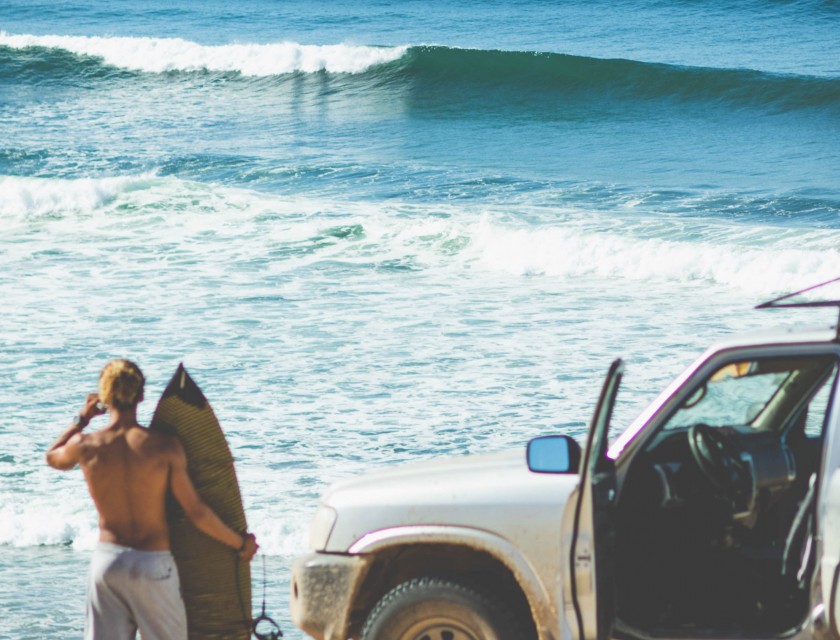
- Everyone is excited in the van
- You even debrief after each session
Left alone, it’s easy to skip marginal days. But in a community, you show up anyway. And those average days often teach you the most.
Since 2003, we’ve watched this pattern repeat itself. Guests arrive unsure. They leave not necessarily as pros but as surfers who understand their own rhythm because they’ve surfed consistently with support around them.
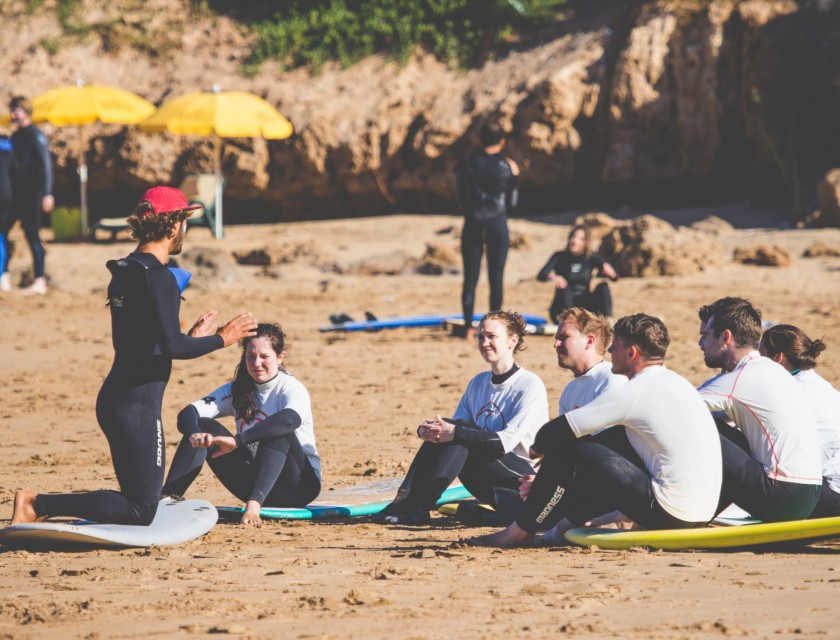
8. You learn faster when you watch others
Surfing is visual. You learn by seeing lines drawn properly. By noticing where someone positions themselves in the lineup. By watching how they read a section.
In a group setting:
- You observe different approaches
- You see mistakes that mirror your own
- You pick up small adjustments without formal instruction
- You notice how subtle shifts can make huge differences
Essentially, watching your surf coaching group shortens the learning curve without feeling like a classroom. You also get to see some pretty epic wipeouts!
7. Shared energy reduces fear
Let’s talk about nerves.
They’re totally normal, for one. But they’re also worth mentioning. Big waves. New breaks. Crowd pressure. Even pros get nervous about these things.
But letting your fear rule you slows progression more than anything.
Community or group surf sessions soften that edge.
Paddling into a new wave feels different when you’ve got a familiar face hooting you from the shoulder. Wiping out feels lighter when everyone’s laughing about their own beatdowns back on the beach.
Taghazout’s point breaks are perfect for this. Long walls. Predictable takeoffs. Space to practise without chaos.
It’s not about proving yourself. It’s about building confidence gradually.
6. Feedback lands better from people you trust
Coaching matters. But feedback only sticks when you’re open to it. In a community environment:
- Advice feels supportive, not critical
- Corrections happen casually, not formally
- Progress is celebrated collectively
That emotional safety speeds improvement. You’re more willing to try new positioning. To paddle for waves you’d normally let go. To fail in front of others because everyone else is failing too.
5. Surf trips build micro communities fast
There’s something about shared saltwater mornings that bonds people quickly.
At Surf Maroc, days follow a rhythm:
- Morning surf
- Breakfast together
- Midday downtime or analysis
- Afternoon session
- Dinner and stories
It creates natural accountability without pressure. You’re surrounded by surfers at different stages but with the same intention. That shared curiosity keeps momentum high.
And yes, you improve. But you also laugh more and do cool things around Taghazout that stir the soul. And isn’t that what travel is all about?
4. The gym analogy works for a reason
Think about the gym. You can train alone. Plenty of people do.
But classes, training partners and shared goals keep you consistent. You send memes and WhatsApp messages to each other to get pumped up. And that creates somewhat of a resonance chamber where all of a sudden, your algorithm and conversations are entirely gym-focused.
Surfing works the same way.
Our group surf coaching sessions give you:
- Structure
- Accountability
- Encouragement
- Perspective
And perspective is important. Because sometimes progression stalls. Conditions change. Energy dips.
Being around others reminds you that plateaus are normal. There’s always someone to pick you up again when you’re ready to go too.
3. It reframes what “good” even means
In isolation, it’s easy to measure yourself against highlight reels. In a group setting, the goalposts shift.
Good becomes:
- Popping up smoothly
- Paddling back out after a heavy wipeout
- Not putting your wetsuit on backwards (it happens and it’s funny, but it’s OK!)
- Trying a shorter board
- Doing it all again after a big day in the water
These micro wins add up.
And in places like Taghazout, where the many different surf breaks invite repetition, progression becomes subtle. Cleaner pop-ups. Better timing. Smarter positioning.
That’s real surfing.
2. You’re reminded why you started
Somewhere between trying to improve and scrolling surf clips online, it’s easy to forget that surfing is meant to be fun.
One of the most heartwarming pieces of feedback we receive centres around this. People often say that learning together is what makes surfing so enjoyable, whereas going it alone can feel, well… lonely. Think about it.
- The shared sunsets
- Post surf tagines
- Comparing wave counts with zero ego
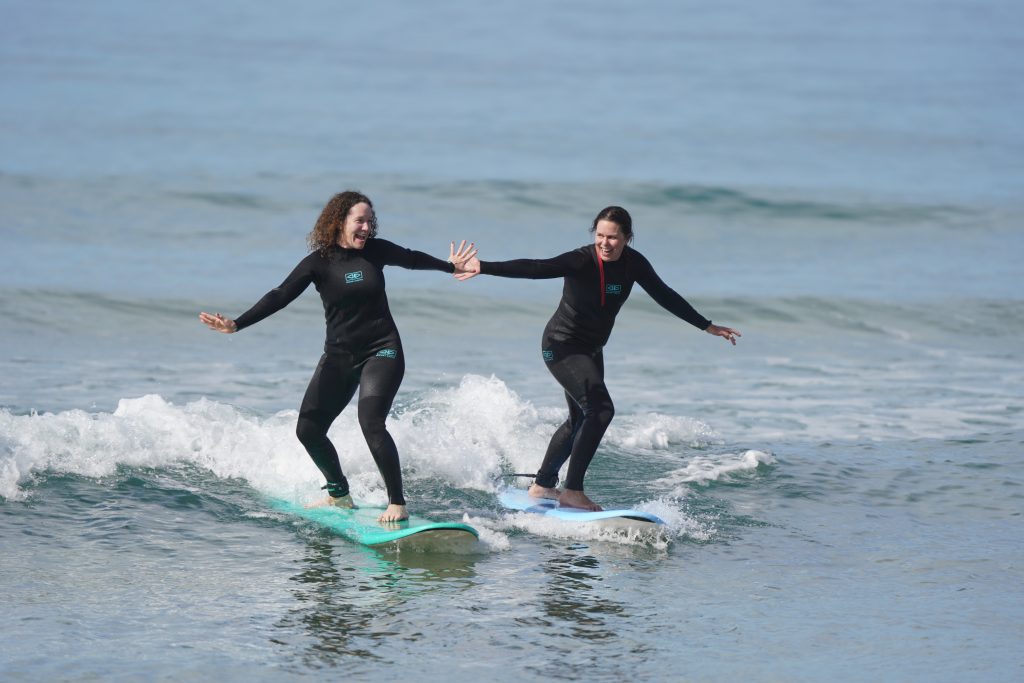
- Laughing about wipeouts
It takes the spotlight off performance and puts it back on experience.
And here’s the quiet truth. When you’re enjoying yourself, you relax. And when you relax, you surf way better.
1. It’s OK to be just OK
Not everyone needs to rip like a pro. Not everyone wants to. Surfing can be a lifelong practice without a performance target attached.
You can ride mellow waves, exclusively surf soft-tops or paddle out only on days when it’s sunny and warm (which is a lot here!).
That’s enough.
Community reinforces this. You see different goals coexisting. Some are pushing hard. Others are cruising. But everyone is sharing the same lineup respectfully.
There’s no right or wrong way to surf. Dance to the beat of your own drum and remember point 2… it’s all just for fun.
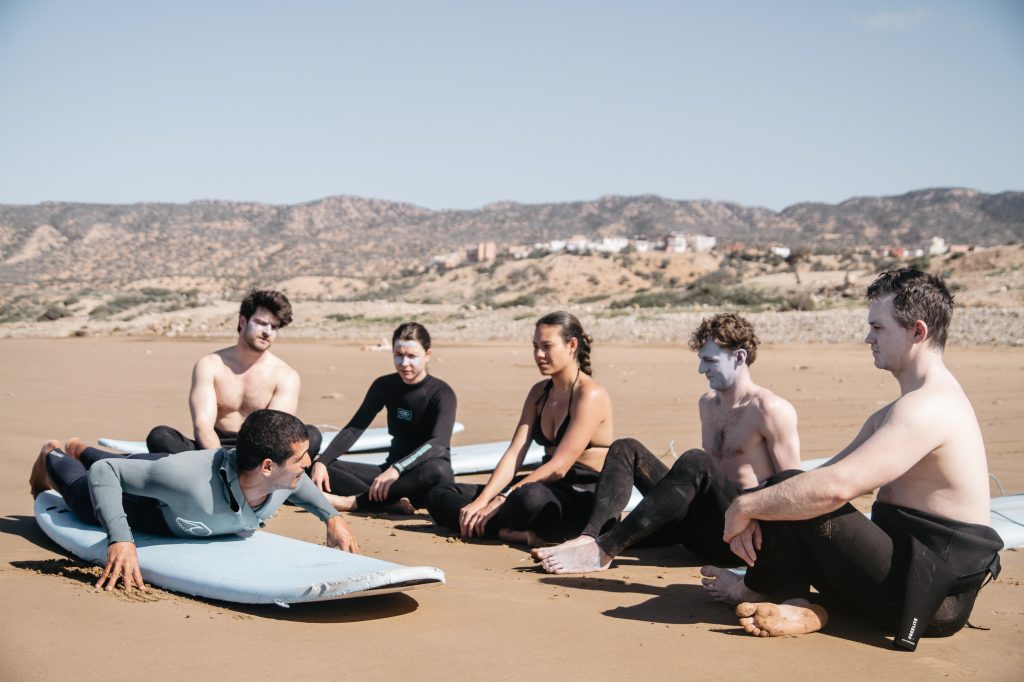
Why Taghazout works so well for this
Taghazout has grown over the years, but it’s still small enough to feel connected.
Lineups are still social. The local girls and guys at your favourite cafe remember your order. There’s a rhythm to the days that encourages interaction, which is something that’s sorely missing in many places.
That’s why surf progression here doesn’t feel rushed.
It unfolds naturally. With support. With space. With people who care more about your confidence than your cutback.
And after more than two decades on this stretch of coast, we get it. We actually understand that progression is about more than wave count. It’s about building surfers who want to keep surfing.
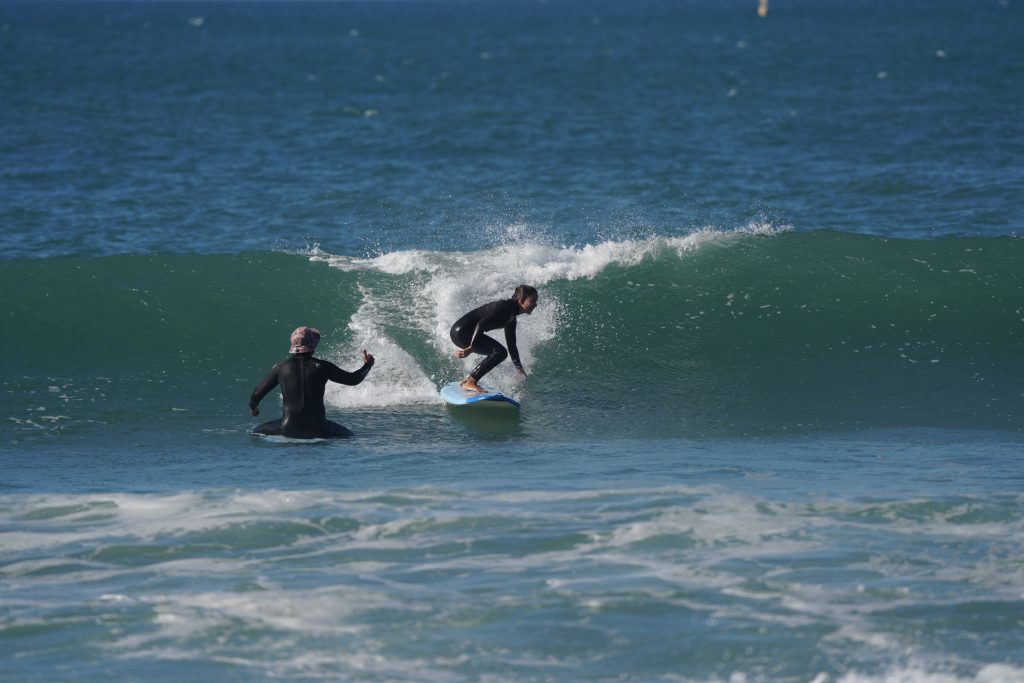
Final thoughts
Yes, you can improve alone. But improvement accelerates when you’re surrounded by people who share your curiosity.
Community builds consistency. Consistency builds confidence. Confidence builds progression. And progression, while satisfying, isn’t the whole point.
The point is showing up and leaving the water with salty skin and a smile on your face. And probably lots of sand in hard-to-reach places.
Because at the end of the day, if you’re going to learn, you may as well learn with people who multiply the fun factor.